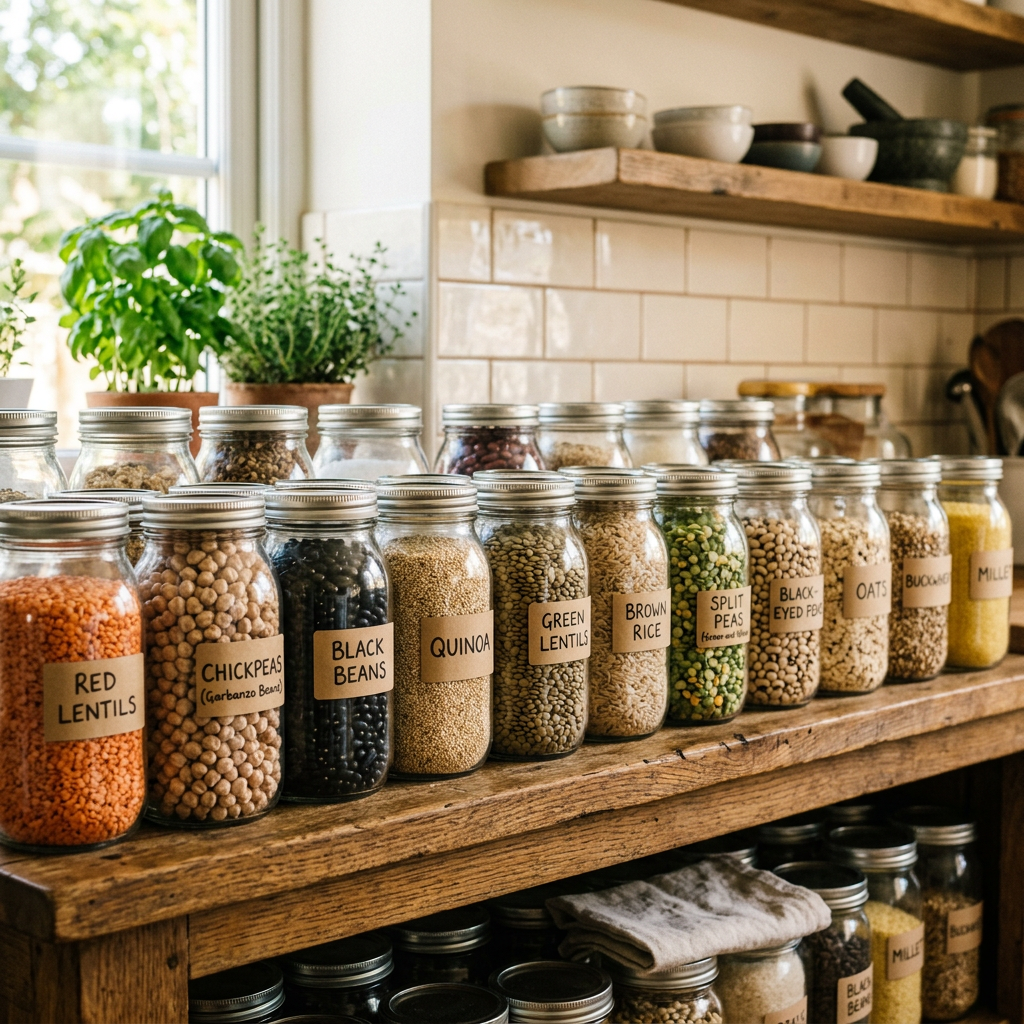
Grains and legumes are awesome, super affordable staples that pack a punch when it comes to dietary fiber, protein, and potassium. Plus, they’re low in fat and easy on the wallet!
Cooking Dry Beans
Cooking with dry beans is super simple, but you gotta plan a bit ahead. Soaking them overnight helps knock down the phytic acid—yep, that’s the stuff people call an “anti-nutrient.” It can mess with how your body absorbs minerals like iron, zinc, calcium, and magnesium. Plus, soaking makes cooking quicker and the beans easier on your stomach. Once they’re cooked, toss them in chili, whip up some burritos, or blend garbanzo beans into hummus. Just keep your cooked beans covered in the fridge, and they’ll last for a few days!
If you’re short on time, just grab an electric pressure cooker to soak those beans! You can whip up some chili in under an hour, and it’ll make your meat super tender too.
Ingredients:
- Dried beans of choice, such as kidney beans, lentils, or pinto beans.
Instructions:
- Give the beans a quick sort and rinse, and keep an eye out for any tiny rocks.
- Toss the beans in a bowl, cover ’em with a good 2 inches of water, and let ’em soak for about 6 hours or just overnight if you prefer!
- Drain and rinse those beans, then throw them in a stockpot and cover ’em with about 2 inches of water.
- Pop a lid on that pot and crank up the heat to medium-high until the water’s boiling. Then, turn it down to low and let those beans simmer until they’re nice and tender—should take about 45 minutes to 2 hours, depending on which beans you’re using. (By the way, lentils cook up the quickest, while kidney beans take their sweet time.)
- Drain the beans.
Whole Grains
Whole grains are basically the unprocessed version of flour. You can whip up some flour by using a grain grinder on whole grains. Think freshly ground grains like rye, barley, and oats—there’s really nothing quite like the flavor you get from grinding them yourself compared to the stuff from the store. If you’re not growing your own grains, no worries! You can just buy them in bulk.
Bulgur wheat, rice, and quinoa cooked in broth or water puff up into delightful bites. You can enjoy these grains sweet or savory, based on how you whip them up. They’re awesome for cozy meals, tasty porridge, and fresh salads.
Storing Grains & Legumes:
Flour can chill for about a year, as long as it’s not too humid where you are. Whole grains and dry legumes, when stored right, can stick around for years!
Grains and legumes should stay dry in airtight containers to avoid moisture. If you’re just keeping a little bit around, regular canning jars will do the trick. But if you grab those big 25-pound bags, the way to go is with a solid five-gallon bucket that has a gamma lid. This gamma lid has two parts: a round ring that snaps onto normal buckets and a twist-off lid. Oh, and don’t forget, you can throw in some moisture absorbers for extra protection in those storage containers!

