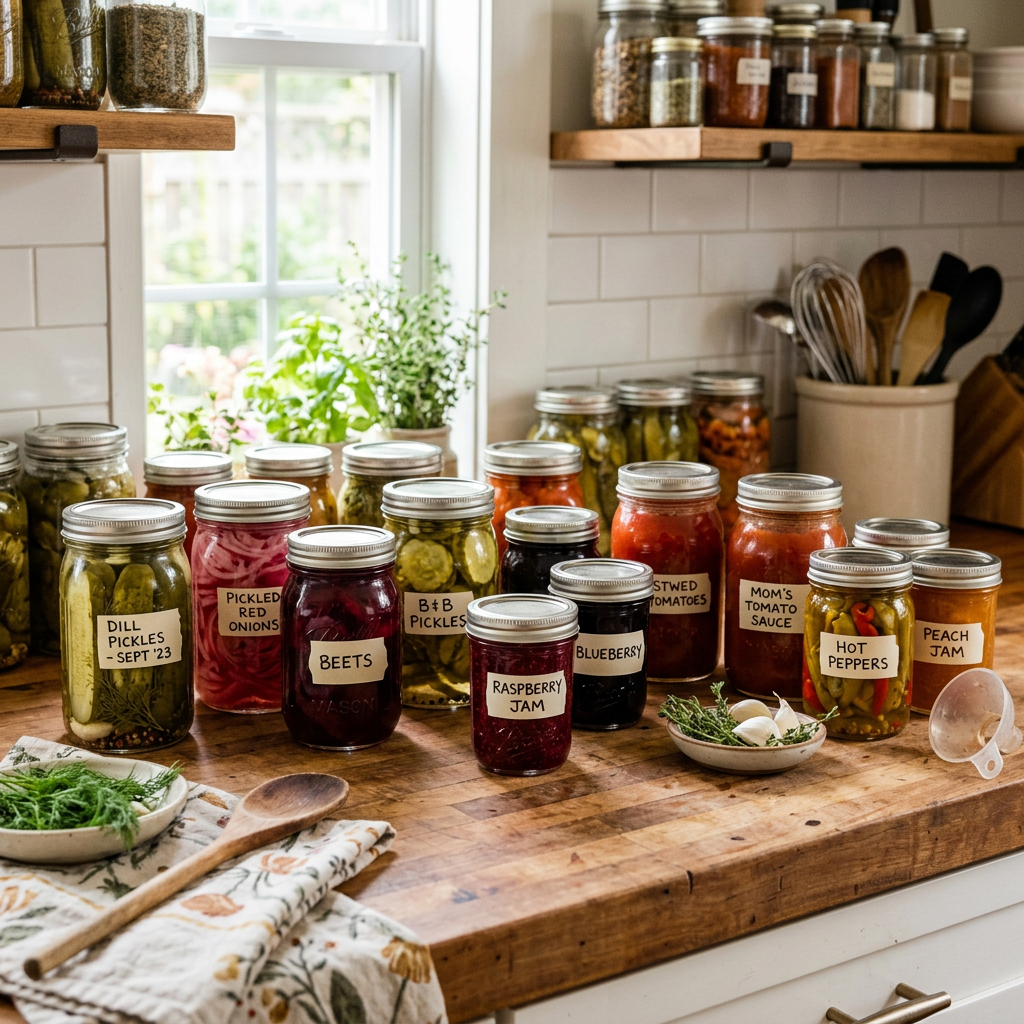
Home Canning Fun!
Home canning takes some time, but man, it’s definitely worth it!
The Science of Canning Safety
- Canning is a cool way to keep food fresh by kicking out the oxygen, getting rid of the enzymes that make fresh stuff go bad, and stopping bacteria, yeast, and mold from crashing the party.
- The vacuum seal that comes from processing foods keeps your grub safe from any gross stuff.
- Keep your utensils & hands clean to avoid contamination.
- If you’re canning low-acid stuff like meats and veggies, make sure to use a pressure canner.
- Botulism can totally survive a water bath process and can even grow in sealed jars of low-acid foods. It’s not super common, but it can be deadly! If you stick to the right canning methods, use the right gear, and follow the processing times, you are in the clear.
Canning Jars– You need specialized jars. They come in a variety of sizes. You will be able to reuse your jars for years! Canning jars are usually embossed with a brand name (like Ball or Kerr). They aren’t expensive & you can usually find them at garage sales too.
Canning jars are sealed up using a simple two-part system: you’ve got a flat lid (known as “flats”) and a ring or band that keeps the flat snug while you process everything. You can keep using the jars and rings over and over, but swap them out if they start to rust. Each time you’ll need to grab a new flat, which has a sealing compound around the edge of one side. It sits right on top of the jar’s rim and gets snugged down with a ring, and that flat is what really seals the jar while it’s being processed.
Canning at Altitude – If you’re living above 1,000 feet, you’ll need to adjust your cooking time and/or pressure. Be sure to check with your local county extension agent for canning advice in your area.
Sterilizing Canning Jars
Start with clean jars for anything you’re going to process for under 10 minutes in a water bath canner (check out the details below). If you’re dealing with something that takes longer or you’re pressure-canning, don’t worry about sterilizing the jars; just give them a good wash. To sterilize, pop those empty jars on the rack in your water bath canner. Fill it up with hot water until it’s just above the jar rims. Heat it up until it’s boiling. Let it boil for 10 minutes, and if you’re over a thousand feet in elevation, add an extra minute for every thousand feet. Once that’s done, take them out, drain them, and fill those jars one at a time!
Water Bath Canning
Specialized water bath canners are big pots that come with a wire rack to keep the jars from clanging against each other. A regular water bath canner can fit seven jars at once.
- Fill up your canner with enough water so that the jars are covered by about 1 to 2 inches. The exact amount you need will change based on how big your jars are.
- Bring water to a boil.
- Heat water to 140 degrees for raw-packed foods or 180 degrees for hot-packed foods.
- Use a jar lifter to place full jars in the water. Cover & bring water to a full boil over high heat.
- Start timing when the water begins to boil.
- Once processing time has elapsed, turn off heat & remove jars, placing them on a towel-covered surface. Allow jars to cool.
- Check for a seal; The flat should feel solid & a bit indented. If it flexes, the product is not shelf stable. Store in the refrigerator & use it soon.
- Remove bands from sealed jars & was the outside of the jars before storing.
Pressure Canning-
Pressure canning is like making really hot water, way hotter than just boiling it. You’ll need a pressure canner for this. It’s seriously the only safe method for canning things like veggies, meats, and other low-acid foods.
Get ready to use jars in a pressure canner:
- Pour in around 3 inches of hot water into the canner.
- Pop those filled jars onto the rack.
- Pop the canner lid on nice and tight, crank up the heat to high with the vent open, and keep an eye out for that steam escaping!
- Let the steam chill for about 10 minutes, then shut the vent so the canner can start pressurizing.
- Once the dial shows you hit the right pressure, start the timer. Keep that pressure steady for as long as you need to!
- If the pressure drops below what it’s supposed to be, just bump the canner back up to pressure and restart the timer.
- When the time’s up, just let the canner cool down on its own, then pop open the vent.
- Chill for 10 minutes, take off the lid, and set the jars on a towel to cool down.
Venting Pressure – Don’t forget to check out the instructions for your pressure canner! Some of them let steam out through a little valve called the petcock, while others use a weighted gauge.
Pickling
Pickles are basically fruits, veggies, and even sometimes eggs and meat that have been soaked in a vinegar brine to keep them fresh. Whether you’re pickling whole veggies or slicing them up, you’ll get that awesome tangy, sour kick, making it a fun way to save your garden goodies. Great veggies for pickling are things like cauliflower, carrots, cucumbers, green beans, and okra. And don’t forget fruits like peaches, pears, pineapple, and watermelon; they’re perfect for pickling too!
Using a water bath process is a great way to whip up some shelf-stable pickles that you can stash in your pantry. Plus, making pickles in small batches is super easy when your garden veggies are coming in!
When you’re whipping up some refrigerator pickles, you don’t need to mess around with hot water or worry about sealing the jars completely, so any jar that has a decent lid will do the trick. Plus, if you want to fit those veggies in tight, a wide-mouth jar makes life way easier!
Everything Pickles!
Dill Pickles–
You can whip these up using a vinegar brine or just let ’em ferment, but that awesome dill flavor is what they’re really known for!
Sour/half sour-
These pickles are soaked in salt brine instead of vinegar, so they’re only kind of fermented and pretty mellow. People often call them “new dills.”
Sweet or candied-
Packed in a thick syrup or brine, you get that sweet-to-sour goodness with a sugar to vinegar ratio of around 2:1. These pickles are perfect for anyone who loves a little sweetness!
Bread & Butter-
These sweet and sour pickles are packed with flavor from mustard seeds and turmeric, which gives them that cool yellow hue.
Recipes
Canning Recipes
Grape Jelly
Makes about 4-5 pints! Just pop those sealed jars of jelly on the shelf and they’ve got a cozy spot for up to 2 years; once you crack one open, just toss it in the fridge.
What you’ll need:
- 1 box of Pomona’s Universal Pectin
- 4 cups of grape juice (homemade or 100% bought from the store)
- 1/4 cup of lemon juice
- 1/2-1 cup of honey
- 4-5 pint-size jars
- Water bath canner
- Whip up the calcium water by tossing 1/2 teaspoon of the calcium powder from the little packet in Pomona’s Universal Pectin package and 1/2 cup of water into a small jar with a lid. Give it a good shake before you use it!
- Grab a big stockpot and mix together the grape juice, lemon juice, and 4 teaspoons of that calcium water. (Stick the leftover calcium water in the fridge for next time you make jelly.)
- Grab a small bowl and mix together the honey and 4 teaspoons of Pomona’s Universal Pectin.
- Heat up that pot of fruit juice until it’s boiling, giving it a good stir every now and then. Toss in the honey mix and stir it up real well to get that pectin dissolved. Once it’s bubbling again, take it off the heat!
- Pour that hot mixture into the jars, leaving about a quarter inch from the top. Give the rims a quick wipe with a damp cloth. Pop the flats onto the jars and screw on the rings. Just use your fingers to tighten them nicely, but don’t go overboard!
- Just toss it in a water bath canner for 10 minutes!
Chow Chow (Green Tomato Relish)
What you’ll need:
- 12 pounds of green tomatoes
- 8 large yellow onions
- 10 green bell peppers
- 6 hot peppers
- 3 tablespoons of salt
- 1 quart of apple cider vinegar
- 3 tablespoons of dry mustard
- 1 3/4 cups of sugar
- 10 pint-size canning jars
- Water bath canner
Instructions:
- In a food processor, in batches, chop up the tomatoes, onions, bell peppers, and hot peppers until they’re in nice little 1/8 to 1/4 inch dice (or just do it by hand if you prefer!).
- Toss the chopped veggies in a big bowl, sprinkle on some salt, cover it up with a loose towel or lid, and pop it in the fridge overnight.
- Drain the liquid from the bowl, then toss the veggies into a big stockpot. Mix in some vinegar, mustard, and sugar.
- Heat it up until it’s bubbling a bit on medium-high, then dial it down and let it simmer until those veggies are nice and soft, which should take around 15 minutes.
- Pour that hot relish into your pint-size canning jars. Put the flats on the jars and twist on the rings. Just use your fingers to screw each ring on nice and tight, but don’t go overboard!
- Just pop it in a water bath canner for about 10 minutes.
Salsa
Makes 7-9 pints. Perfect for snacking with chips, tossing into your chili, or adding to your soup. If you keep those jars sealed, they can chill at room temp for up to 2 years; just pop them in the fridge once you open one!
What you’ll need:
- 14 cups of chopped tomatoes
- 3 large red or yellow onions, chopped
- 6 jalapeño peppers, diced & seeds removed (use gloves)
- 4 banana peppers or other mild pepper, diced & seeds removed
- 4 garlic cloves
- 2 cups fresh lemon juice
- 1 tablespoon of salt
- 1 tablespoon of sugar
- 1 teaspoon black pepper
- Optional for thicker salsa: 1-2 (12 oz) jars of tomato paste
- 7-9 pint-size canning jars
- Water Bath Canner
Instructions:
- If your tomatoes are super juicy, just drain some juice off until they have the texture you’re going for in your salsa. The juiciness you put in the pot is what you’ll get in the jar, so keep that in mind!
- Toss all the ingredients into a big stockpot. Crank up the heat and bring it to a boil, then turn it down and let it simmer for about 30 minutes, giving it a stir now and then.
- Pour that hot salsa into 7-9 jars, depending on how much you made, and make sure to leave about a 1/2-inch of space at the top.
- Pop the flats on the jars and screw on the rings. Just using your fingertips, tighten each ring good and snug—but not overly tight!
- Pop it in a water bath canner for about 15 minutes.
Soup Broth
Save those turkey and chicken bones to whip up a delicious broth! For beef broth, just toss the bones in the oven to roast first.
Throw some roasted bones or a leftover carcass in a pot, and you can either use a crockpot or just stick it on the stove. Cover it all with water and let it chill on low for 24 to 48 hours. When it’s done, strain it, and don’t forget to sprinkle in some salt!
Instructions:
- Pour that hot broth into jars, making sure to leave about an inch of space at the top.
- Grab a damp cloth and wipe down those rims, then pop the flats on the jars and add the rings. Use your fingers to twist the rings on nice and snug—just don’t go overboard and make them too tight!
- Just toss it in a pressure canner at 10 pounds of pressure. If you’re using pint jars, let it go for about 20 minutes. For quart jars, give it 25 minutes.
Pickle Recipes
If you’ve got a ton of cucumbers hanging around, why not whip up some pickles? They’re super easy to make and totally jazz up any sandwich or potato salad. Plus, you can stash those homemade pickles in their juice in the fridge for over 6 months!
Refrigerator Bread & Butter Pickles
Makes 2 quarts
What you’ll need:
- 6 cups sliced-cucumber rounds
- 2 cups thinly sliced white onions
- 2 tablespoons of salt
- 2 cups of sugar
- 1 cup of apple cider vinegar
- 1 teaspoon of celery seed
- 1 teaspoon mustard seed
- 1/2 teaspoon ground turmeric
Instructions:
- Toss together the cucumber, onion, and salt in a big bowl. Fill it up with cold water, cover it up, and let it chill for about 3 to 6 hours at room temp.
- Toss the cucumbers in a strainer and split ’em up between 2 jars with lids.
- In a saucepan, toss together the celery seed, mustard seed, turmeric, vinegar, and sugar. Simmer it all on medium heat, stirring now and then, until the sugar melts away. Let it cool down a bit, then pour it over the cucumbers so they’re all nice and submerged.
- Pop those lids on the jars nice and tight! Then toss ’em in the fridge for a couple of weeks before you dig in.
Dilly Green Beans
Makes 2-3 pints
Instructions:
- Get a big pot of water boiling.
- Toss in the green beans and let them boil until they’re nice and crisp, about 8-10 minutes. While that’s happening, grab a big bowl and fill it with ice water.
- Drain the beans, then toss ’em into ice water right away to stop ’em from cooking.
- Split up the dill, garlic, and jalapeño peppers between the jars.
- Grab those jars and tilt ’em a bit while you pack in the beans. Once they’re filled up, give ’em a good squeeze for that snug fit.
- In a medium saucepan, throw together the white wine vinegar, sugar, salt, and 2 cups of water; heat it up until it starts boiling, giving it a stir now and then.
- Take the pan off the heat and pour that hot liquid over the beans in the jars, making sure they’re totally covered!
- Slide a butter knife between the packed beans & the side of the jar to please any air bubbles trapped between the beans.
- Seal the jar with the lids, then refrigerate for at least a week before serving.
Easy Pickled Veggies
Makes 2 quarts
Grab any fresh, blemish-free veggies you’ve got lying around for these zippy pickled goodies. Carrots, cauliflower, green beans, and sweet peppers are a solid start. Want a little heat? Just toss a whole hot pepper into each jar. This recipe’s meant for 2 quart-size jars, but you can totally use 4 pint-size ones or any other jars that seal tightly. These chilled pickled veggies will stay good in the fridge for 6 months or even longer!
What you’ll need:
- 2 tablespoons of black peppercorns
- 6-8 garlic cloves, smashed
- 2 tablespoons of pickling spice (you can grab this at a good grocery store)
- 8-10 cups of fresh veggies, just give ’em a wash and chop or slice ’em into bite-sized pieces.
- 2 cups of apple cider vinegar
- 2 tablespoons of salt
- 2 tablespoons of sugar
Instructions:
- Split the peppercorns, garlic, and pickling spice between 2 quart-size jars.
- Stuff those jars with the veggies!
- In a pot, mix the vinegar, salt, and sugar with 2 cups of water. Bring it to a boil, then turn down the heat and let it simmer for about 5 minutes.
- Just pour the hot liquid into the jars, making sure to cover those veggies completely.
- Screw the lids on the jars and just let them chill until they’re cool enough to handle.
- Pop it in the fridge and give it a week before you dig in!
Watermelon Rind Pickles
Makes 6 pints
Hey, don’t toss those watermelon rinds in the compost just yet! You can whip them up as a fun side dish or snack by wrapping them in bacon and baking them on a rimmed baking sheet at 400 degrees until the bacon gets all crispy. If you make some watermelon rind pickles, just pop them in sealed jars and they can chill at room temp for up to 2 years—just remember to refrigerate them after you crack them open!
What you’ll need:
- Rind from 1 large watermelon
- 1 cup of salt
- 4 teaspoons of whole cloves
- 15 cinnamon sticks
- 1 tablespoon mustard seed
- 8 cups of sugar
- 4 cups of apple cider vinegar
- Cheesecloth & butcher’s twine or 1 spice bag
- canning funnel
- water bath canner
Instructions:
- Go ahead and chop off all the pink and green bits from the watermelon rind.
- Chop up the leftover white part of the rind into 1-inch chunks.
- In a big bowl, mix together 1 gallon of water and the salt, giving it a good stir until it’s all dissolved. Toss in the rind, then just let it soak overnight.
- Get your water bath canner filled up and heat it to a boil while you tackle the next steps.
- Drain the watermelon and toss it into a big stockpot. Cover it with water, then get it boiling on medium-high heat. Turn down the heat and let it simmer until those rinds are almost tender, around 30-40 minutes. Then, drain it out!
- Toss the cloves, cinnamon, and mustard seed into the middle of the cheesecloth, then tie it up tight with some twine. Pop that sachet into the empty stockpot along with the sugar and vinegar.
- Get that vinegar mix boiling over high heat. Then, turn it down and let it simmer for 15 minutes. Toss in the watermelon rinds, crank up the heat, bring it back to a boil, and cook until the rinds go all transparent, which should take about 20 minutes.
- Grab a canning funnel and pour those hot rinds into the jars. Then, use a ladle to splash in the hot pickling liquid, making sure it covers the rinds and leaves about half an inch of space at the top.
- Give the jar rims a quick wipe with a damp cloth, pop the flat on the jars, and then screw on the rings. Use your fingers to twist them on snugly but don’t go overboard!
- Pop those jars in a water bath canner and let them hang out for 10 minutes.
Pickled Ginger
Makes about 1 pint
Making those paper-thin pickled ginger slices you often get with your sushi at home is a total breeze! You can use it like a dipping sauce or toss it in as a marinade. This recipe suggests a pint-sized jar, but really, any small container with a good seal works. Just pop that pickled ginger in the fridge, and it’ll stay good for up to 6 months!
What you’ll need:
- 1/2 pound of fresh ginger, peeled and sliced super thin—best to use a mandolin slicer if you’ve got one!
- 1 cup of rice vinegar
- 1/4 cup of sugar
- t teaspoon of salt
Instructions:
- In a pot, boil up a quart of water. Toss in the ginger and let it cook until it’s just tender, about 2-3 minutes, depending on how thick those slices are.
- Drain the ginger really well and let it chill for a bit.
- Toss the ginger into a pint-size jar.
- In a pot, mix together the vinegar, sugar, and salt, then bring it to a boil.
- Just pour the hot liquid over the ginger in the jar.
- Pop the lid on the jar, give it a good shake by flipping it upside down a few times to mix everything up.
- Pop it in the fridge for 3 days before chowing down.

