There are several ways to extract juice.
Mechanical Juicing
Mechanical juicers mash up fruits and veggies, pulling out the juice while leaving the pulp behind. It’s a super quick way to get your drink on, kinda like using an apple cider press!
A solid cupboard handle or a hook is a perfect spot to hang your bag in the kitchen.
You can totally use a sieve to get the juice from fruit. Just toss your fruit into a regular kitchen sieve and let the juice drip out. There are also these cool cone-shaped sieves made just for this, and they usually come with a nifty wooden pestle to help mash the juice through those little holes.
Manual Extraction
Fill up a big pot with fruit and cook it until it gets all soft (check the chart for details). Once the fruit is cooked, you can strain out the juice in a bunch of ways. The simplest and cheapest method just relies on gravity and the weight of the fruit itself.
Instructions:
- Grab a bowl and line it with a bunch of cheesecloth or a thin flour sack towel.
- Pour the cooked fruit into the bowl, then grab a towel or some cheesecloth and bunch it up over the fruit.
- Grab some kitchen twine and tie that bag of cooked fruit up nice and tight, then hang it over the bowl.
| Fruit | Size | Water | Cook | Processing Time for Juice |
| Apples | Cut into 1/4s | Barely cover w/ water | 20-25 min | 5 min |
| Apricots | 1/2 | 3 cups of fruit to 2 cups of water | heat to simmer | 15 min |
| Blackberries | Whole | no cooking required | mash clean fruit | 5 min |
| Grapes | whole (remove stems) | Barely cover w/ water | Heat to simmer | 5 min |
| Grapefruit | 1/2 | No cooking required | Ream juice from fruit | 10 min |
| Peaches | Crushed fruit | equal parts water & fruit | Heat to simmer | 15 min |
| Plums | Whole | 1 inch in pan | 10 min | 5 min |
| Tomatoes | Small pieces | No water | Simmer until soft | 35 min/pints, 40 min/quarts |
Steam Extraction
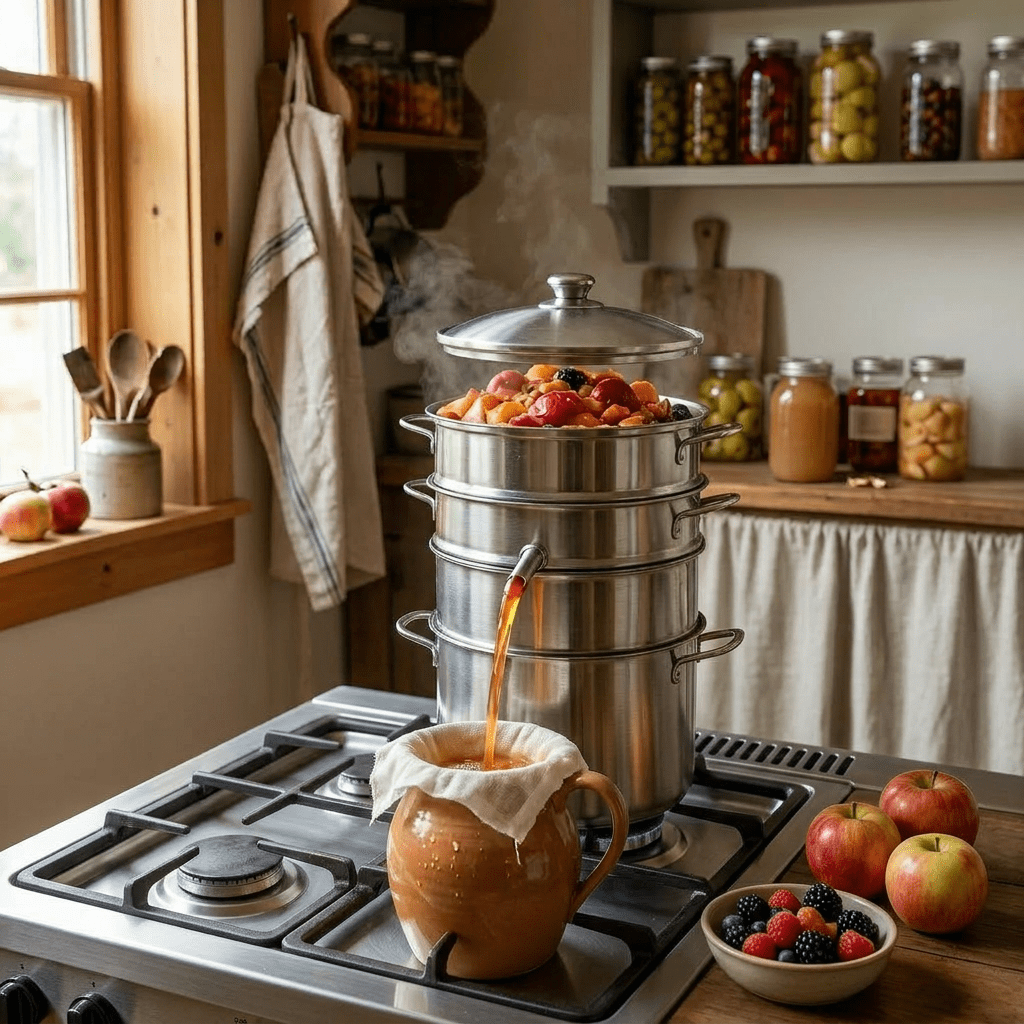
If you’re going to be harvesting a bunch of fresh fruit, grabbing a steam extractor is definitely worth it. It has three tiers – the bottom is a big pot filled with water. The top tier is basically a strainer, like a colander, where you throw in the fruit. The middle tier collects the juice and has a little hole that lets steam from the bottom tier rise up to the top. As that steam softens the fruit, the juice drips down into the juice collector. Plus, the juice-collecting tier comes with a drain tube so you can easily gather the juice while it’s cooking.
Preserving Fruit Juice
Processed, refrigerated fruit juice will last about a week.
Using a water bath canner, you can whip up some juice that’ll last on your shelf and totally beat those store-bought jugs. Plus, if you boil it down, you can make some awesome jelly!
 AnneMazin Sustainin