Fermentation is one of those cool processes that happen when there’s no oxygen around. It’s how we end up with stuff like organic acids (think lactic acid), gases, or even alcohol.
Fermentation has been around for ages, and it’s a cool way to keep food fresh!
Probiotics are microorganisms that are easily created in fermented foods, and they totally help boost your gut health and digestion.
Ale, kefir, kombucha, and sauerkraut, they’re all made through fermentation!
Understanding Fermentation
Grains, veggies, and raw dairy are full of good bacteria when they’re in their natural state. If you create the right conditions for these little guys, they start to grow and multiply, which leads to lactic acid being produced. This awesome process called lacto-fermentation not only makes fresh foods last longer but also boosts the levels of enzymes, probiotics, and vitamins in the end product. And zymology? That’s just the cool science behind fermentation and how enzymes work their magic!
Good Ferments Gone Bad
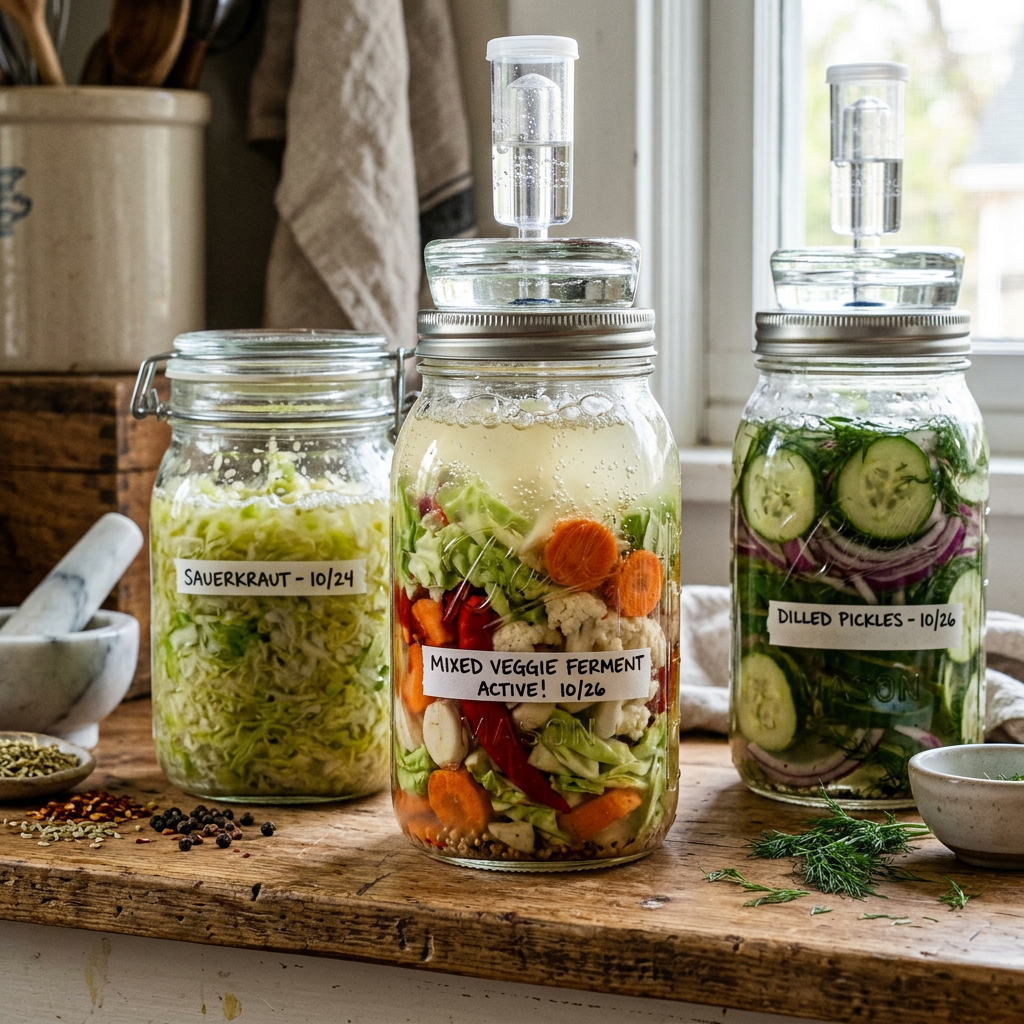
It’s pretty uncommon for ferment to go bad. If the contents start to hit the air because the brine’s run low, then you might have some spoilage issues. Ferments that are bubbling away can spill over, which is totally normal, but if you lose too much liquid, you’ll have to top it off so the veggies stay underwater. You might notice a little bit of white yeast floating on top of the liquid—no worries, just scoop it off!
Some considerations:
- If your white yeast looks all funky and turns green, pink, yellow, or blue, just toss it into the compost bucket.
- Smell it; it should have a pleasing sour or yeasty odor.
- Try it! A bold taste is totally fine, and the flavor might shift a bit over time. Just make sure it never tastes bad.
- Keeping your fermented goodies in a cool, dry spot like a pantry or cellar can help them last for up to a year. Sticking them in the fridge will definitely slow down the fermentation, but it’s really not a must.
What you’ll need:
There’s a bunch of cool tools out there, but honestly, not many of them are actually needed.
- Glass weights – to keep the ingredients submerged in the liquid. If you’re not keen on buying glass weights, just fill a plastic bag with water and pop it on top of the liquid!
- Air locks – these handy things seal up your jars but let those gases out as your food ferments. Or you can Just pop off the lid of your jar once a day to let off some pressure. Seriously, you don’t want a big, messy blowout of fermenting liquid!
The Roots of Fermentation
- Kombucha kicked off in China and then took a trip down the legendary Silk Road.
- Kefir first showed up in the 19th century, coming straight out of the Caucasus Mountains.
- Beer-making probably came about right around the same time people started farming grains.
 AnneMazin Sustainin